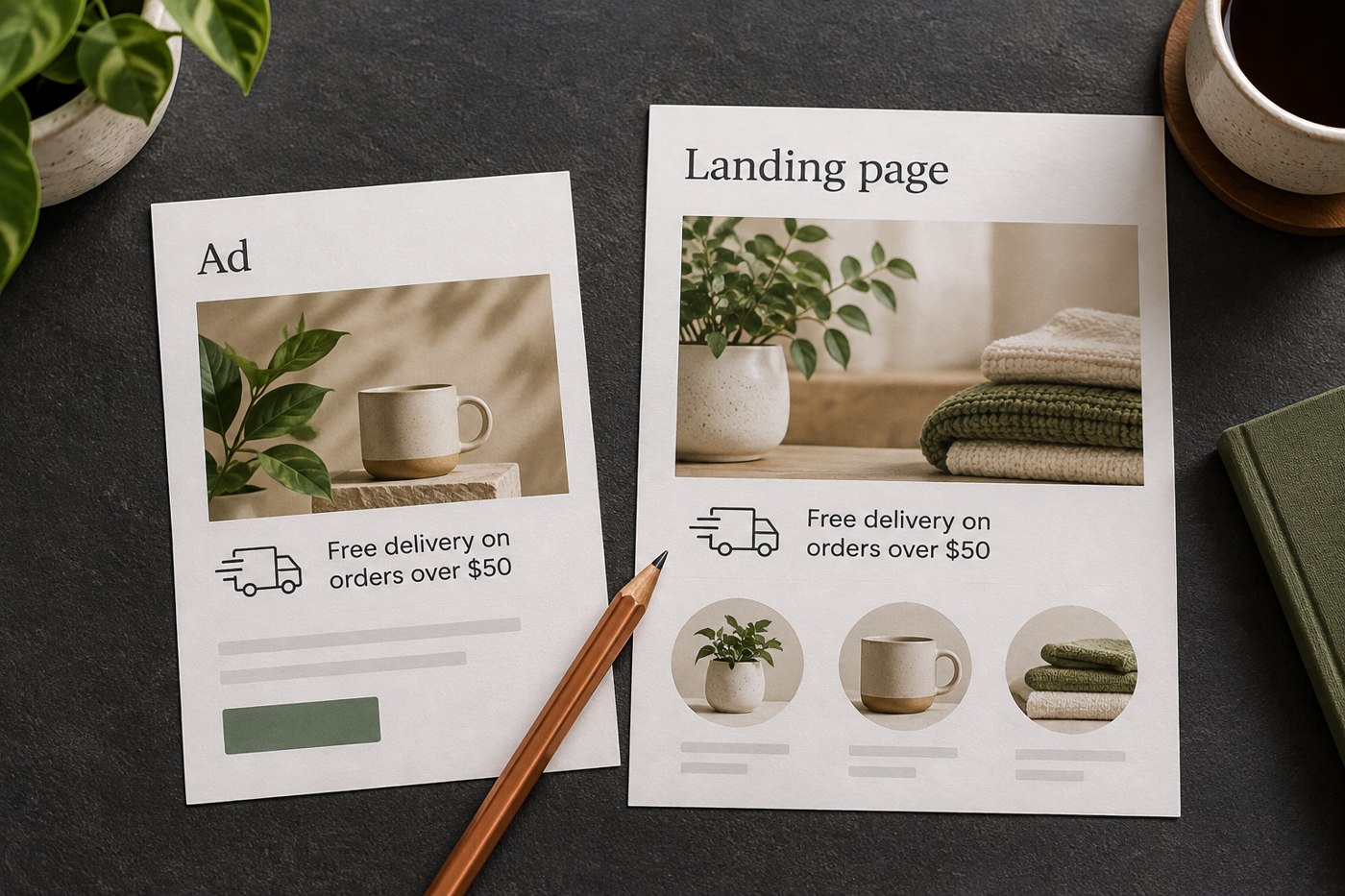
A visitor who clicks an offer should not have to work out whether they reached the right page. When an ad promotes one workshop and the landing page opens with a general catalog, the connection is weak even if the workshop exists somewhere below.
Treat the ad and destination as one conversation. The ad introduces the offer; the page explains it and supports the next decision. The wording does not need to be identical, but the product, conditions, and action should agree.
Compare the offer side by side
Place the final ad next to the landing page. Check the name of the service, price or pricing basis, included items, location, availability, and deadline. If the ad says a consultation is free, the page should explain any real limitations before someone begins booking.
For example, a printer promoting a package of event flyers should land visitors on that package or a clearly identified section. The paper size, quantity, and artwork requirements must match. A headline price for a different quantity creates confusion that attractive design cannot repair.
Review images too. A photograph showing accessories that are not included may imply a larger package than the text promises. Use a suitable image or explain the distinction clearly enough that a buyer can understand it.
Follow the action through completion
Click the ad's actual destination link on a phone. Check that the page loads, the promised offer is visible, and the button leads to the correct form or product. Complete a test using the site's supported testing method. Do not stop at confirming that the first button responds.
Read the confirmation message. It should describe what has happened: an inquiry submitted, a booking requested, or an order confirmed. These are different states. If a staff member must review availability, say so before implying the visitor has secured a place.
Keep changes synchronized
Assign an owner to update both the campaign and its destination when an offer ends or changes. Pausing an ad does not remove saved links or shared posts. Consider what an old link should show, such as an ended-offer explanation with a relevant current alternative.
Maintain a short campaign record containing the live destination and approved terms. This helps whoever handles customer questions avoid relying on an outdated screenshot. Consistency is easiest when the business has one clear source for the offer, rather than separate versions maintained by the advertising, website, and service teams.